
Cloud vs. On-Premises Computing Cost Comparison
Our engineers have developed a report that can be customized for your exact situation.
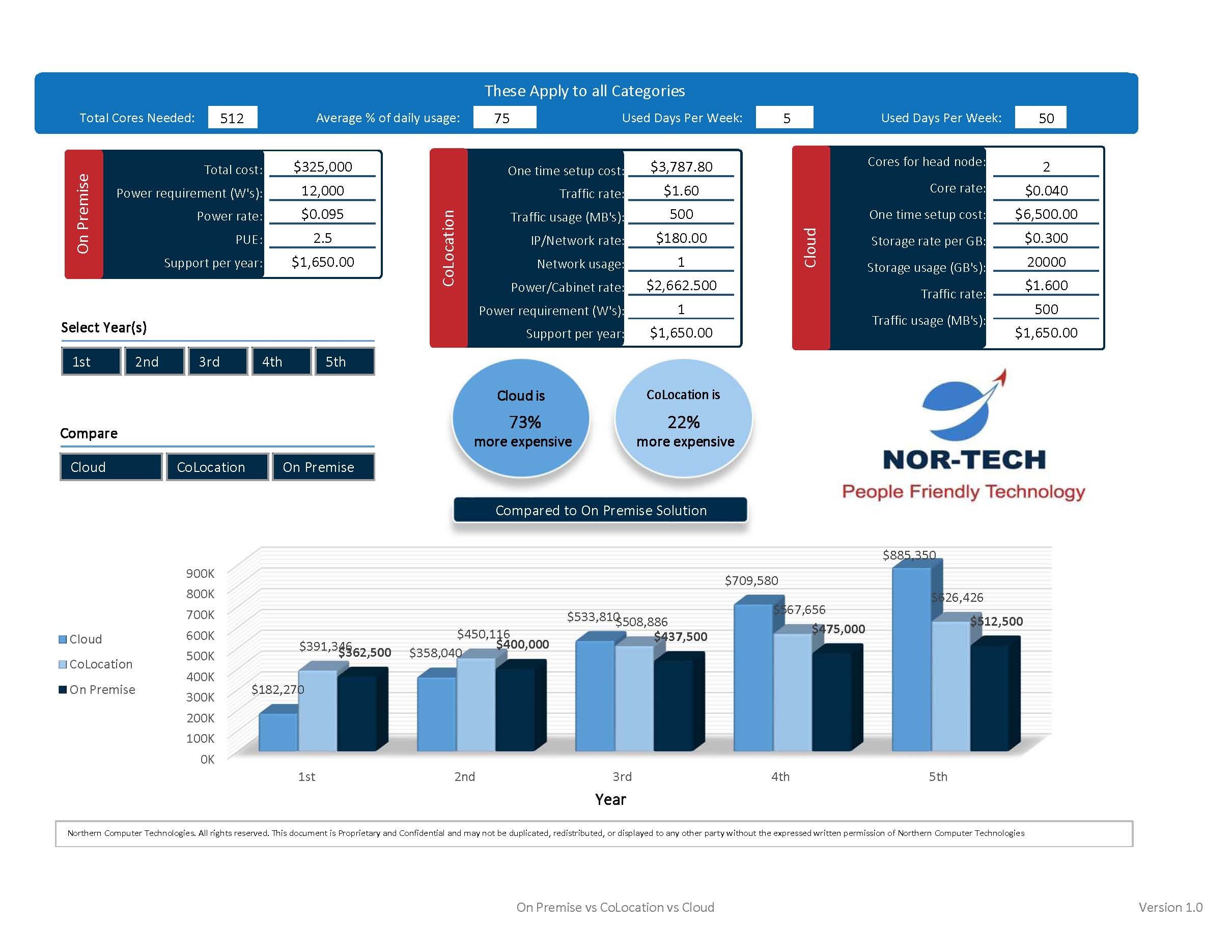
Have You Considered the True Cost of Cloud vs. On-Premises Infrastructure?
Every organization has unique performance, security, and budget requirements. Our engineers can provide a customized cost analysis based on your specific applications, workloads, user counts, and growth projections.
Workload Utilization Drives the Economics
The most important factor in determining cloud versus on-premises value is system utilization. For organizations running engineering simulation, AI, machine learning, data analytics, or traditional HPC workloads on a regular basis, on-premises infrastructure often delivers a significantly lower total cost of ownership. When systems are heavily utilized, the monthly operational expense of cloud computing can quickly exceed the cost of owning dedicated infrastructure.
In many customer analyses, organizations with sustained workloads realize a return on investment for on-premises infrastructure within the first year. With typical system lifecycles of three to five years, the long-term savings can be substantial, even after accounting for power, cooling, maintenance, and administration costs.
Performance Impacts Cost
Cloud providers charge based on resource consumption and time. The longer a job runs, the more it costs. Faster infrastructure can reduce both application runtime and cloud expenses. For many engineering and AI applications, performance is influenced by several factors, including:
- CPU architecture and frequency
- GPU acceleration
- Memory capacity and bandwidth
- Storage performance
- Network latency and throughput
- Application optimization
Organizations running large simulation, rendering, AI training, or data processing workloads often benefit from infrastructure specifically optimized for their applications rather than relying on generalized cloud resources.
Software Licensing Can Exceed Hardware Costs
For many commercial applications, software licensing costs can represent a larger investment than the hardware itself. Applications such as CAE, CFD, FEA, EDA, AI development platforms, and other engineering tools frequently use licensing models based on cores, users, tokens, or runtime. Reducing job completion times can lower overall software consumption and improve engineering productivity.
Additional Considerations Beyond Cost
While cost is important, organizations should also evaluate:
- Data security and compliance requirements
- Intellectual property protection
- Predictable budgeting and cost control
- Availability of specialized hardware
- User experience and application responsiveness
- Scalability requirements
- Data gravity and storage costs
- Hybrid cloud strategies
Cloud and On-Premises Can Work Together
Many organizations achieve the best results through a hybrid approach—maintaining cost-effective on-premises infrastructure for predictable workloads while leveraging cloud resources for peak demand, temporary projects, or rapid expansion. Our engineering team can help determine the optimal balance between cloud and on-premises resources based on your performance requirements, workload characteristics, and budget objectives.
Contact Us Now to Create an Honest Customized Comparison Today Based on Your Requirements.
952-808-1000
Request Info
SEND US A MESSAGE
"*" indicates required fields